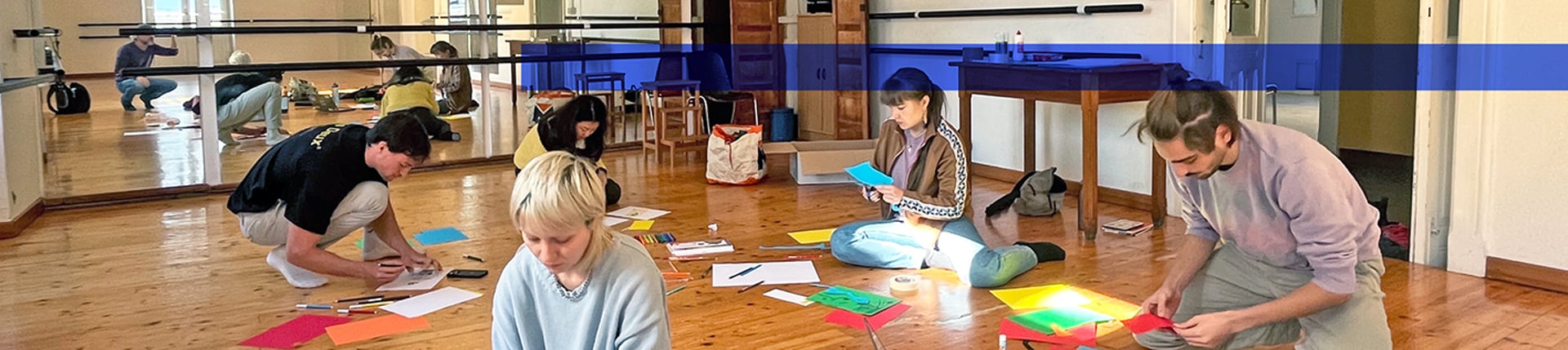
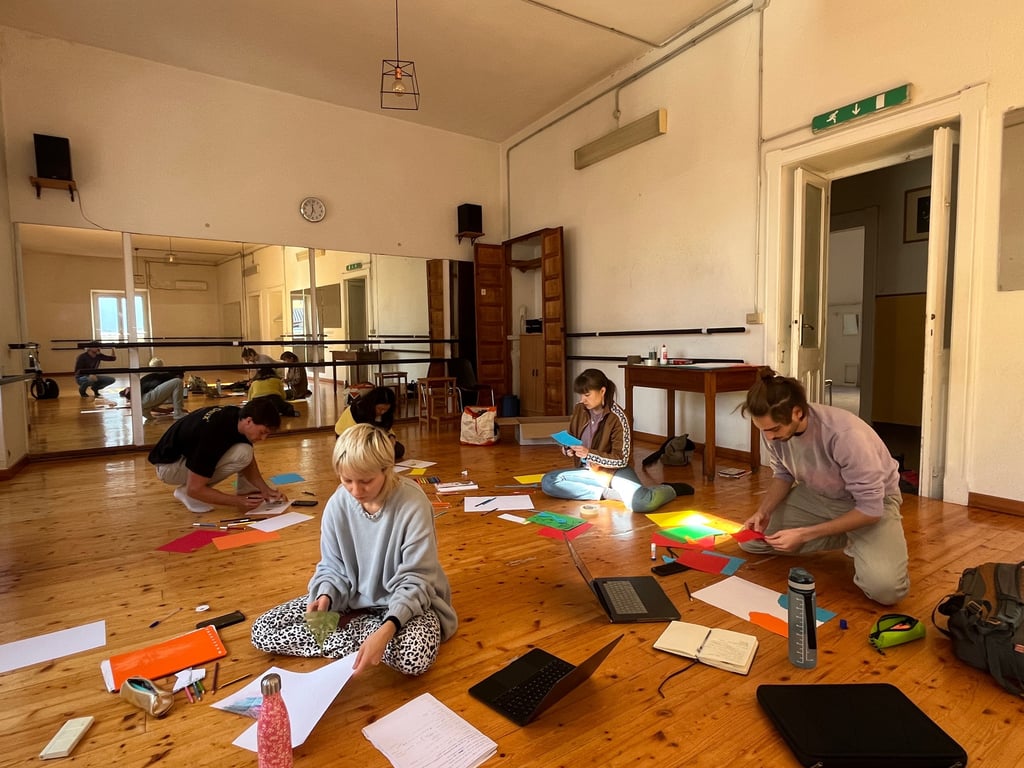
Bypass Workshop, Sardegna Teatro 2024
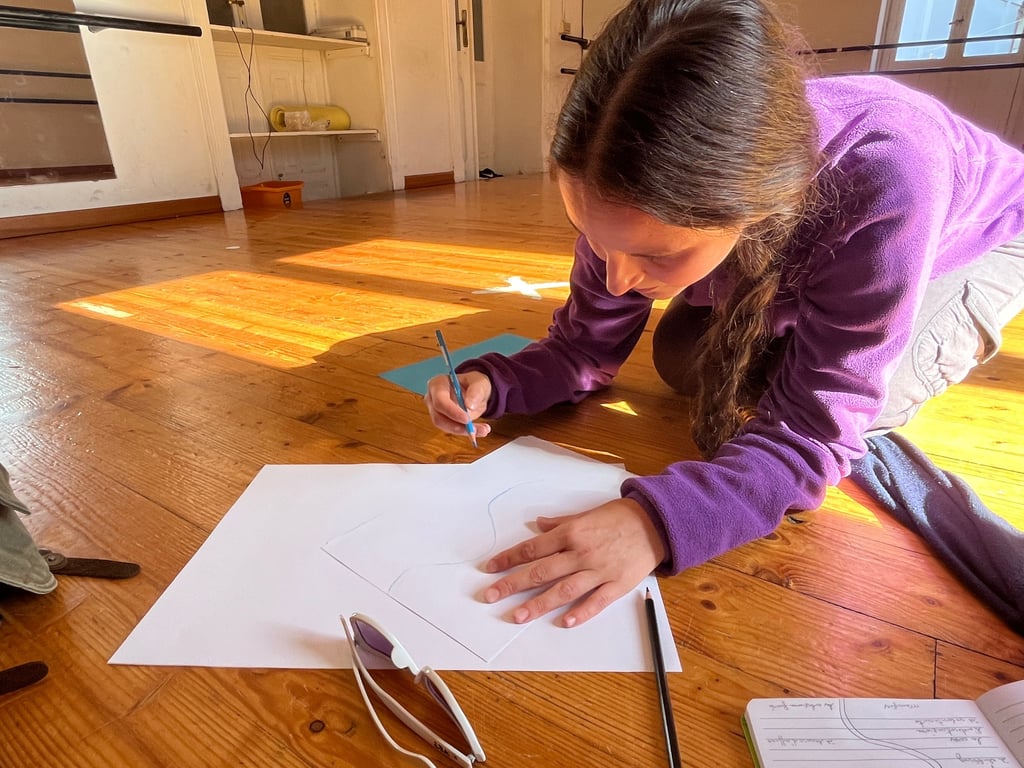
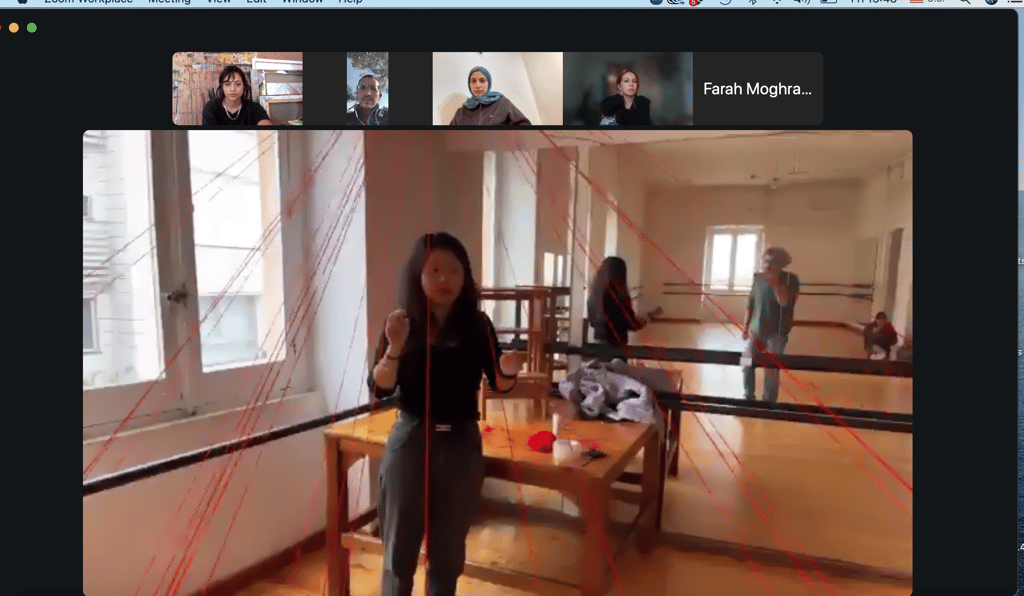
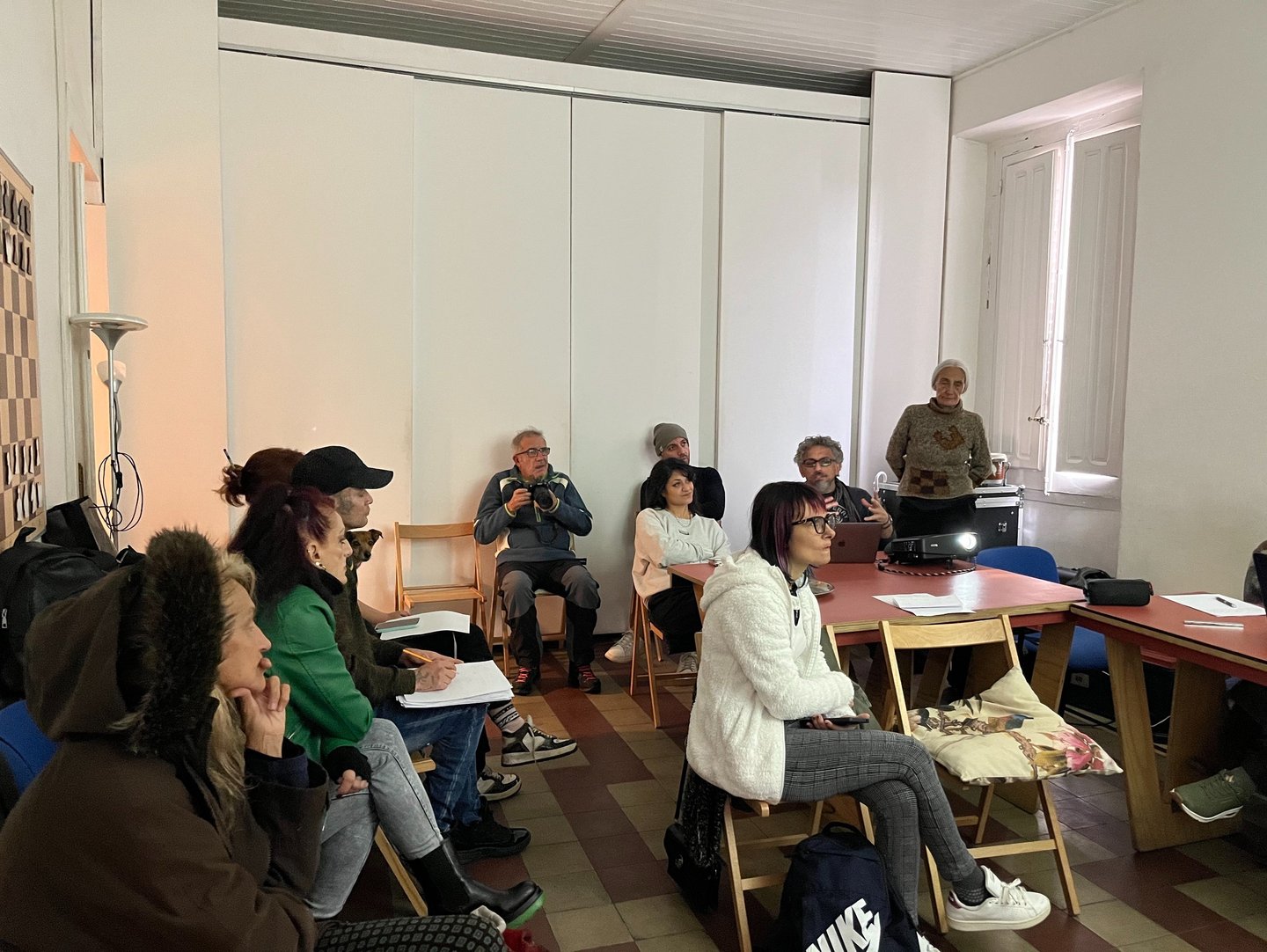
Within the framework of cultural and knowledge exchange projects, Palestinian artist Rafat Asad worked with a group of participants and members of Sardinia Teatro in Cagliari, Sardinia. During the workshop, Asad showed the participants several important Palestinian art and performance works, discussed the role of art in the political and social context, and touched on the usefulness of the arts in times of war.
Asad presented his artistic project “Eltifaf - ByPass” as a model for artistic expression, where he introduced the idea of circumvention as a concept for artistic production, and the importance of finding alternative ways in the face of bans and closures. The workshop lasted for five days, during which the participating artists exchanged experiences and ideas.
This workshop comes within the framework of the joint cultural exchange program between Al-Studio TBC. and Sardinia Teatro in Cagliari, which is part of the efforts to build cultural and artistic bridges between Palestine and Italy.

SMI CARAVAN CULTURAL ASSOCIATION
Via Dante Alighieri, 60 - 09127 Cagliar
Sardegna Teatro
Theater production in Cagliari, Italy
Bypass, Performance Workshop – Passed on the Art Exhibition (Eltifaf / Bypass, 2016)
by Rafat Asad
In this regard, introducing the element of performance brings an additional dimension to the Eltifaf project. Performance art, rooted in the physical presence of the body in time and space, allows for a direct confrontation with the themes of road and barriers. Performance is not simply representation, but rather an act of living and embodying the experience: How does the body move within constrained spaces? How does it resist prohibition or adapt to it? How does the artist’s presence become a living medium that connects the audience with the road?
Through this lens, the project extends beyond the canvas and is renewed through performance, as a practice that rethinks the interrelation between place, body, and memory. It is within this framework that we can reconsider the personal timeline embedded in every individual journey—reproducing and reshaping it through lines of movement, gestures, and embodied acts.
The Performance Workshop – Passed on the Art Exhibition (Eltifaf / Bypass, 2016) presents a thoughtful exploration of participation, movement, and collective experience within contemporary art. Rafat Asad shifts the focus from static exhibition to dynamic interaction, inviting participants to engage physically and conceptually with the space.
Floating Workshop, SMI Caravan Cultural Association 2025
A visual art production workshop titled Ibhar (Floating) concluded in Sardinia, under the supervision of artist Rafat Asad. The workshop was organized through a collaboration between the Al-Studio…TBC in Ramallah, Palestine, and SMI Caravan Cultural Association in Cagliari, Sardinia.
The program brought together Palestinian artists alongside local artists, dancers, and musicians from Sardinia, aiming to re-explore human connections through the exchange of experiences, stories, and knowledge. Participants engaged in in-depth discussions and artistic experiments addressing both individual and collective narratives, seeking to reshape them into a shared story that transcends the personal toward a broader human perspective.
Working in mixed groups that included Palestinian participants and local residents of Cagliari, the artists combined visual arts, movement, and music to produce collaborative expressive works.
The workshop was guided by questions around the relationship with water and the sea, considering their political, social, and economic dimensions, and how visual arts can reinterpret these experiences through new media. In this context, the integration of performance became a key element, introducing a new dimension through the presence of the body in time and space as a living medium. This approach reexamined the human relationship with the sea, travel, and mobility through lived experience, reflecting on movement within constrained spaces and how the body itself can become a site for reinterpreting memory and personal history.
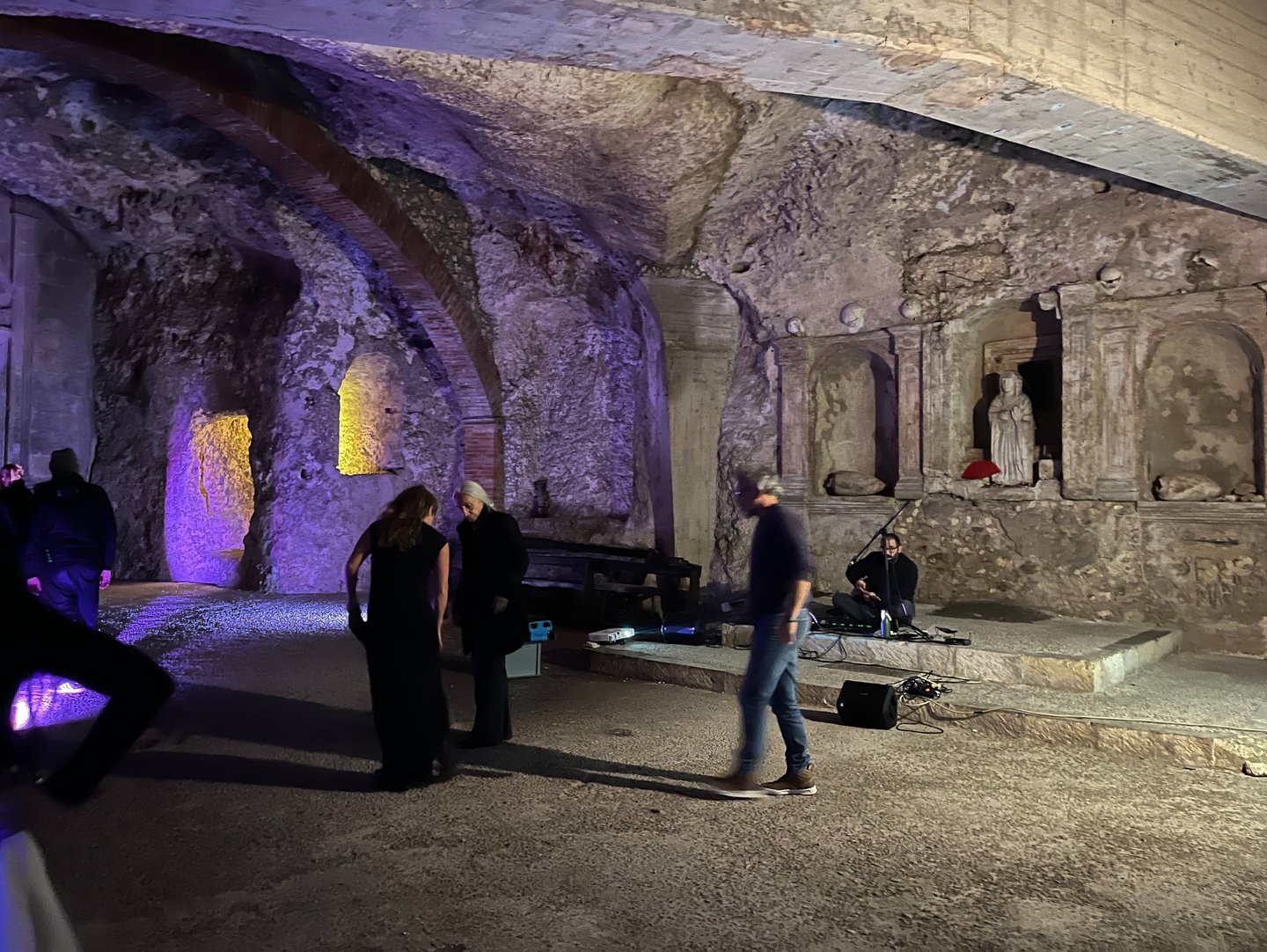
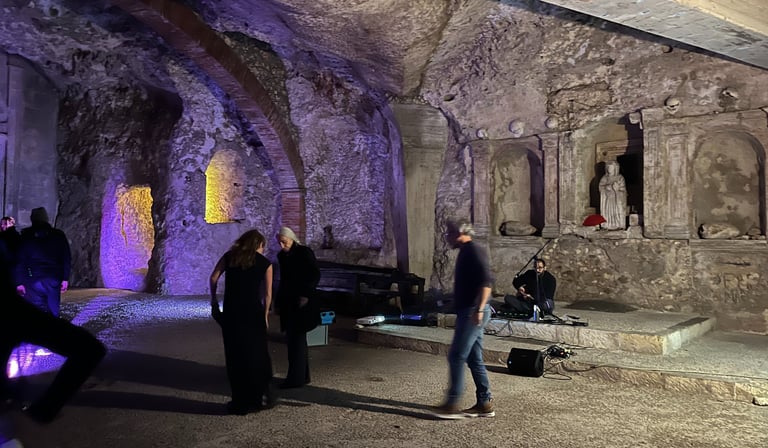
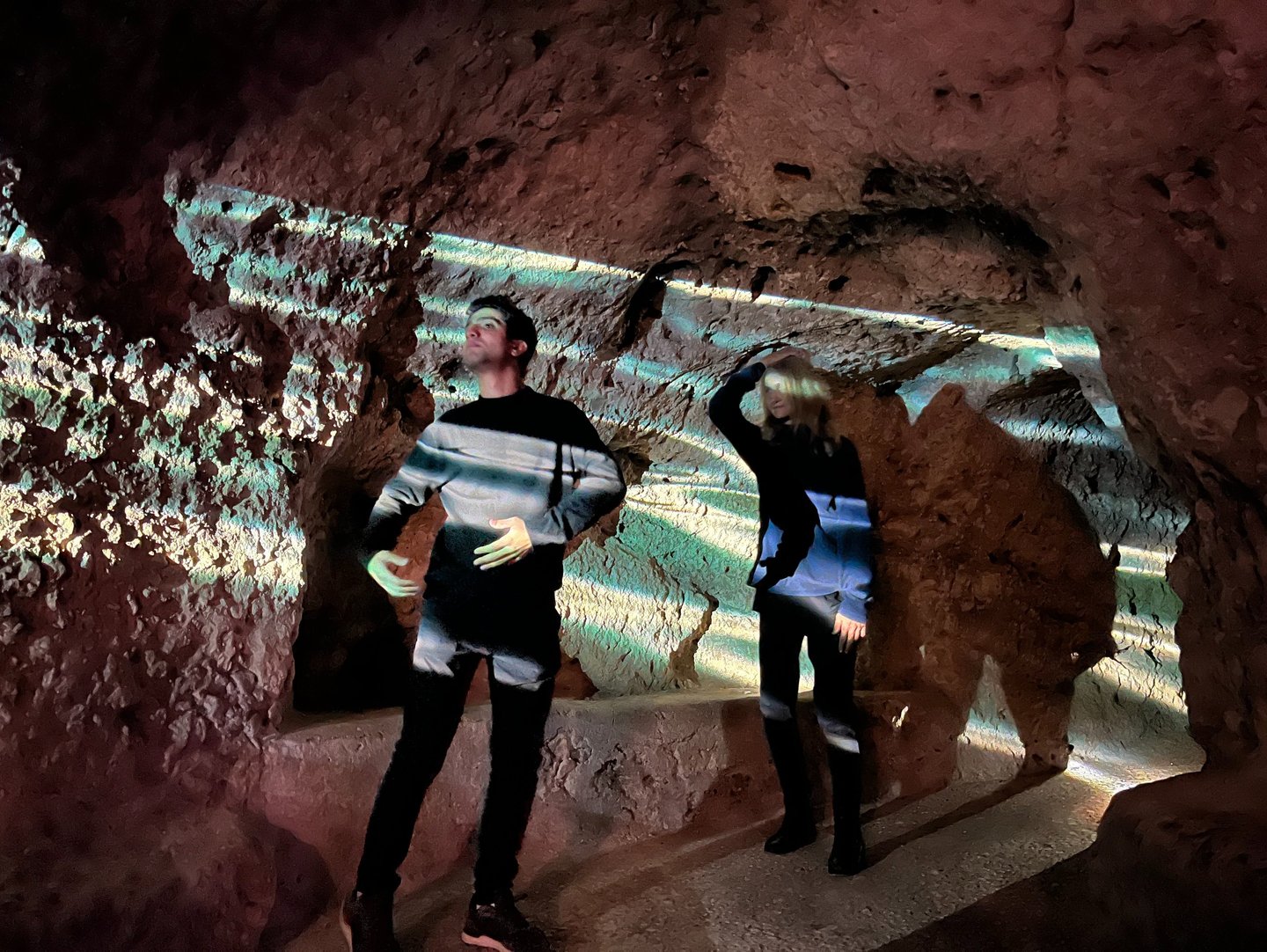
The workshop culminated in a performance held inside a historic cave in Cagliari on Friday, November 28, 2025, where participants presented a collective work reflecting their shared artistic journey—blending visual art, movement, and sound within a unique natural setting.
Floating Performance Workshop – Passed on the Art Exhibition, (Mediterranean Sea 2020),
by Rafat Asad
Since my childhood, I have understood the importance of stories and tales, especially when I used to listen to my father recall countless stories about the sea, swimming, and the relationship between humans and water. My father was a skilled swimmer and often shared with me the joy he found in swimming and being close to the sea, the days he would spend entirely in the water, especially when he swam in the Sea. He used to tell me that he would wait for vacation just to go to the sea and spend his time in its embrace, describing the feeling as if he were in the arms of a mother, whether the sea was cold or warm. The sensation of the sea, for him, was pre-anticipated—it was a certainty that it would treat him kindly, whether in summer or winter. What mattered most to him was the ability to go and stay as long as possible.
The single photograph I found of my father by the sea was enough to bring back all these memories of his relationship with the sea and the stories he had told me. As for me, I had no special connection to the sea; I had barely experienced it, as I have always been afraid of the sea, water, and swimming. Here emerges the contrast between me and my father: he grew up near the sea and spent most of his time in its waters, enjoying swimming, while I grew up in a rugged, mountainous area far from the sea.
When I discovered this photograph, I decided it would serve as my guide and the starting point for exploring the Palestinian relationship with the sea. My father was born in 1928 and lived in Haifa until 1948, after which he relocated and eventually returned to Nablus, where I was born, following his departure from the sea.
I decided to see the sea through my late father’s eyes, through his stories, narratives, and tales about the sea and his time in it. He spoke of the sea in a language full of passion and affection. I had not realized the intimacy of this language until I began to feel the contradictions in my own relationship with the sea—fear, estrangement, drowning, separation. All these emotions surrounded my experience of the sea, as if they prevented me from finding a path to journey alongside it.
This introduction explains my personal relationship with the sea and what prompted me to produce a series of paintings about the Palestinian Mediterranean, despite having visited it only a few times.
In this workshop, we will revisit stories and narratives about water—sea, lake, river, and more—to use them in dialogues and discussions among participants from diverse cultural and knowledge backgrounds. Some live beside the sea, river, or lake daily, while others are far from these waters.
We will re-explore these relationships by exchanging experiences, stories, knowledge, and reflections, posing many questions with the aim of producing artworks that redesign these narratives and integrate them into a collective story, one that moves beyond the personal to the universal. From there, we can perceive things from a human perspective and explore ways to express ourselves and others through the artistic tools available to each participant, encouraging collaboration and collective work among Palestinian participants and local residents of the city.
This workshop, stemming from the project, opens a new space for discussion and experimentation regarding our relationship with water and the sea, considering political, social, and economic dimensions, and exploring how art can reframe this experience using contemporary media—whether through painting, photography, collective memory, or performance.
Performance Art in the Context of the Workshop
Introducing the element of performance adds a new dimension to the “Floating (Mediterranean Sea)” project. Performance art, based on the presence of the body in time and space, allows a direct confrontation with the subject of travel and movement. Here, performance is not merely representation but a lived act of embodiment: How does the body move within constrained spaces? How does it resist restriction or adapt to it? How does the artist’s presence become a living medium between the audience and their relationship with the sea?
Thus, the project becomes a continuously evolving extension, focusing on performance as a form of art that rethinks the relationship between place, body, and memory. Through this, personal narratives can be reproduced, drawn, and expressed through bodily movements, transforming them into a living, shared memory that transcends individuality toward collectivity.

Address
Al Baladiya Street - Raha Building 5th floor , Ramallah, Palestine
Contacts
+970 597 542 208
info@al-studio.com